


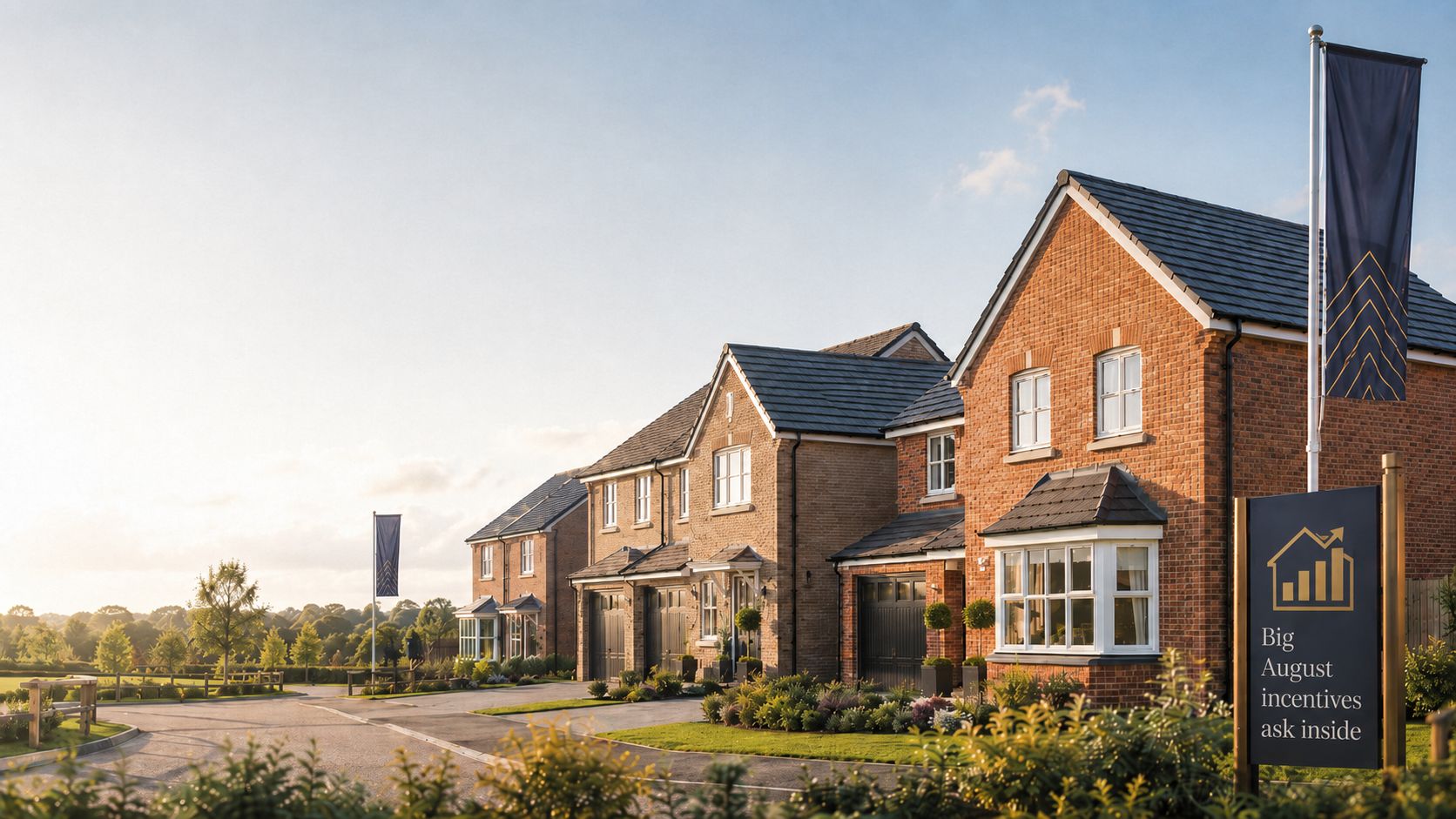
It might sound slightly strange to suggest that problems facing some of the UK’s biggest housebuilders could be good news for property investors.
But that’s exactly what we think is happening.
Higher construction costs, expensive mortgages and more cautious buyers are putting pressure on housebuilders to sell completed stock and keep cash moving through their businesses.
The result? Some of the UK’s largest developers are currently prepared to do deals that would have been extremely difficult to secure in a stronger market.
For investors looking for good-quality new-build houses, we think this has created a particularly interesting buying window.
What’s Happening to the Big Housebuilders?
Recent analysis reported by the Financial Times highlights just how challenging conditions have become for Britain’s major developers.
The eight largest listed UK housebuilders are forecast to generate combined adjusted operating profits of around £2.3 billion in 2026 — approximately 12% lower than the £2.6 billion achieved last year.
Perhaps more importantly, the cost of actually building a house has increased dramatically.
Material and labour inflation alone is estimated to have added around £37,000 to the cost of constructing a new home since 2020.
So housebuilders have a problem.
Their costs have risen significantly, while higher mortgage rates have made buyers more cautious and reduced what some households can afford.
That puts pressure on developers to keep selling.
And That’s Where the Opportunity Begins
Housebuilders aren’t landlords.
They don’t particularly want hundreds of completed homes sitting on their balance sheets waiting for someone to buy them.
Their business model is relatively simple:
Build. Sell. Release the capital. Build again.
When sales slow, developers therefore have a strong incentive to find buyers — and that’s creating opportunities for property investors.
The Financial Times reports that discounts on some bulk transactions are currently ranging from around 15% to more than 20% against original sale prices.
An individual investor won’t necessarily achieve the same level of discount, but it demonstrates just how motivated some housebuilders have become to turn completed stock into cash.
We’re seeing the same pressure creating opportunities ourselves, with major national housebuilders prepared to offer substantial investor discounts and incentives on selected completed and near-completed homes.
In other words, the seller is motivated.
And motivated sellers can create very good buying opportunities.
Not Every “Discount” Is a Discount
There is an important caveat here.
Just because somebody puts a £250,000 price tag on a property and then offers it to you for £220,000 doesn’t automatically mean you’ve made £30,000.
The original price needs to be realistic in the first place.
How many times have we seen a glossy brochure for some brand new city centre apartments completing in a few years time that are being sold with a “discount”… Nothing has been completed, its often just a brochure and a plot of land. This sort of thing is rife in our industry but we are hugely sceptical when we see the word discount being bandied around.
We want to see a real discount against real market value, not an artificially inflated asking price pulled from thin air and then reduced by 10%.
There’s a big difference.
Why We Like New-Build Houses
We’ve written previously about why we’re particularly keen on good-quality freehold family houses as investment properties.
For us, they tick an awful lot of boxes:
- Excellent energy efficiency
- Lower maintenance costs in the early years
- Modern kitchens, bathrooms and heating systems
- Typically backed by a recognised new-home warranty
- Strong appeal to tenants
- Broad resale demand from families, first-time buyers and investors
- Freehold ownership on the houses we typically favour
- No apartment-style ground rents or large service charges, although some newer estates may have modest management charges
They’re also easy to understand.
You’re buying a real house in a residential area where people genuinely want to live — rather than relying on a complicated investment structure or an ambitious future growth story.
If you can then buy that property at a genuine discount from a motivated housebuilder, the investment case becomes considerably more interesting.
Why Would a Housebuilder Sell to an Investor at a Discount?
It’s a perfectly reasonable question.
Why would a major developer sell a perfectly good house to an investor at a reduced price rather than simply wait for an owner-occupier to come along and pay the full asking price?
The answer is largely cash flow and certainty.
An investor may be able to reserve quickly, proceed without a lengthy chain and buy stock the developer specifically wants moved.
A completed property sitting unsold represents capital tied up, housebuilders hate this and will do almost anything within reason to prevent it happening.
Selling at a slightly lower margin today can therefore make more commercial sense than holding the house for months hoping to achieve the full retail price.
Sometimes it’s simply about the circumstances of the seller.
And in property, the circumstances of the seller are every bit as important as the circumstances of the buyer.
Why These Wont Be Around Forever
Nobody knows exactly what happens next.
Mortgage rates could remain elevated. Buyer confidence could weaken further. Housebuilders may continue offering incentives for longer than expected.
But the opposite could also happen.
If mortgage rates fall, affordability improves and owner-occupier demand strengthens, developers may find it considerably easier to sell their homes at normal retail prices.
And if they can sell a house to a homeowner for £250,000, why would they sell the same property to an investor for £220,000?
That’s why we believe current conditions could represent an interesting window of opportunity.
Today’s discounts exist because today’s market is difficult for developers. If those conditions change, the discounts could change with them.
Don’t Confuse a Motivated Seller With a Falling Market
This is another important distinction.
A housebuilder offering a substantial incentive doesn’t automatically mean house prices are collapsing.
Developers have their own commercial pressures:
- Construction costs
- Sales targets
- Financial reporting periods
- Borrowing costs
- The need to release capital from completed developments
Sometimes an investor can therefore acquire a property below its normal market value because the developer needs the sale more than the investor needs the property.
That’s exactly the negotiating position we like.
Our View
At North Fox, we’re currently paying particularly close attention to opportunities being offered by the major housebuilders.
That doesn’t mean we’ll recommend every discounted new-build property we see. Far from it.
The fundamentals still have to stack up.
Is it genuinely discounted?
Is there strong rental demand?
Does the yield work?
Would an owner-occupier want to buy it from you in the future?
Is it in a location where we’d be happy owning property for the next 10 or 20 years?
If those answers are yes, then today’s housebuilder discounts can make an already good investment considerably more attractive.
Property investment isn’t about trying to perfectly predict what happens next. It’s about recognising when the odds have temporarily moved in your favour.
Right now, some of Britain’s biggest housebuilders need to sell homes, release cash and keep their developments moving. That is giving investors negotiating power that may not be there forever.
We still need the right property, in the right location, at the right price. But when all three come together and the seller is highly motivated, that’s exactly the sort of opportunity we like.
The best time to buy is rarely when everyone feels confident. You make money when you buy and right now there is a golden opportunity to get a genuine deal.


