


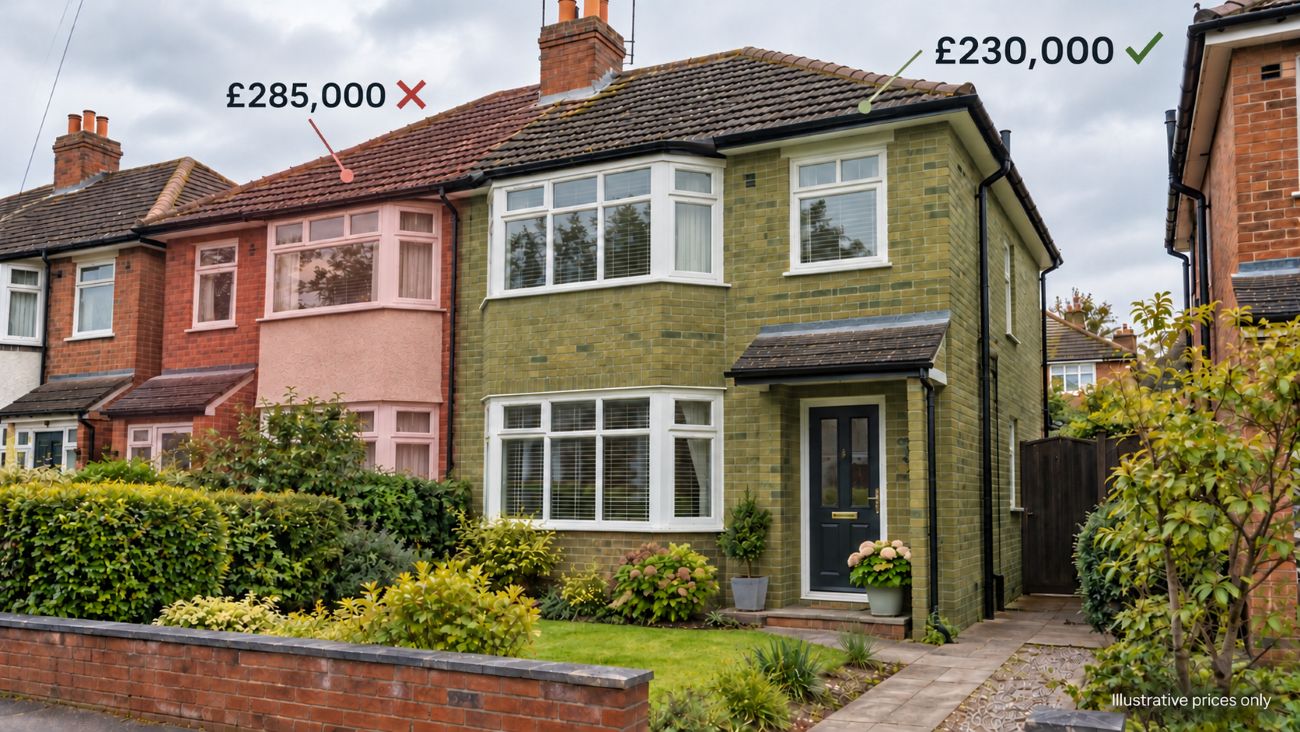
You’ve found a property you like. The rental return looks attractive, the brochure looks good, and you’ve been told you’re getting a favourable price.
But how do you know?
This is something we’d encourage every investor to spend time on. Whether you’re buying a new-build house, an apartment that hasn’t been built yet or an older property that needs some work, you should be able to understand why it’s worth the price you’re being asked to pay.
You don’t need to become a surveyor. But a few sensible questions can tell you a lot.
What have similar properties actually sold for?
This is where we’d start. Ask the agent to show you the sales evidence behind the price.
By that, we mean similar properties that have actually sold. Another apartment advertised at £275,000 doesn’t necessarily make yours good value at £250,000. Both could be optimistically priced.
Rightmove, Zoopla and Land Registry sold prices are useful here, but the important part is choosing the right comparisons.
If you’re buying a new-build house, have other houses of the same type already completed on the development? What did buyers pay, and were there any incentives included? That can give you something quite concrete to work with.
If the evidence is harder to find, ask why. There may be a reasonable explanation, but you shouldn’t have to accept “that’s what they’re selling for” without anything to back it up.
Are you comparing the same thing?
Two three-bedroom houses on the same street can be very different purchases. So can two apartments in neighbouring buildings.
Look at the floor area, layout, condition, parking and outside space. For apartments, check the lease and service charges, too. For an older house, think about the money you’ll need to spend after buying it.
We’d also suggest comparing the price per square foot or square metre. It isn’t a valuation on its own, but it can highlight a difference worth questioning. An apartment might look reasonably priced until you realise it’s substantially smaller than the alternatives.
If you’re paying more, what are you getting for it?
There are good reasons to pay more for some properties. A new home may offer better energy efficiency, a warranty and fewer immediate maintenance jobs. A better plot, practical layout or parking space may also justify a premium.
But put a number on that premium. If you’re paying £30,000 more than comparable properties, what accounts for the difference?
This is particularly worth asking when buying off-plan. Buying before a property is finished doesn’t automatically mean you’re getting a deal. Compare it with completed new properties and resales nearby, rather than only looking at other off-plan developments.
The same applies to a newly converted apartment. Fresh interiors can look impressive, but you’re still buying into a particular building and location.
If there aren’t convincing comparisons to support the price, we’d want to investigate further. A forecast that prices will rise over the next five years doesn’t answer the question of what it’s worth today.
Would you still buy it without the incentives?
Cashback, furniture packages and contributions towards buying costs can be useful. We wouldn’t dismiss them. But we would separate them from the question of value.
A £250,000 property with £10,000 cashback effectively costs £240,000 before other costs. You still need to establish whether £240,000 is a sensible price.
Similarly, a discount from a developer’s price list is only meaningful if the original price was realistic.
It’s also reasonable to ask about buyer fees and how the selling agent is paid. Whatever the sales arrangements, the property’s price needs to stand up on its own.
Do the rental figures hold up?
Check the rental estimate with local letting agents who aren’t involved in selling you the property. Ask what similar homes have actually let for and how long they took to find tenants.
Then work through the costs. Management, maintenance, insurance, service charges and periods without a tenant all affect what you keep.
For an older property, include any work needed before letting it. For a new apartment, take a proper look at the service-charge budget.
A spreadsheet can make almost any deal look attractive if the rent is optimistic and the costs are understated. The assumptions need to be believable.
What would the next buyer think?
Before buying, imagine you’re selling.
What else could someone buy for the same money? Would your property appeal to homeowners as well as landlords? Would you be competing with unsold homes on the development?
And if your purchase includes an introductory rental guarantee or incentive, would the price still make sense without it?
You can’t know exactly what a property will sell for in future. But you can think about whether its appeal extends beyond the package you’re being offered today.
A quick checklist before you commit
- ☐ Have I seen completed sales that support the price?
- ☐ Are those properties genuinely comparable in size, location and condition?
- ☐ Can I explain any premium I’m paying?
- ☐ Does the price still look reasonable once I’ve separated out the incentives?
- ☐ Has someone independent of the sale checked the rental estimate?
- ☐ Have I allowed for buying costs, repairs and ongoing expenses?
- ☐ Have I thought about who would buy it from me?
- ☐ Does the deal work without relying on future price growth?
You may not have every answer straight away. But if several are missing, pause and ask for more information. Where the value is difficult to establish, consider an independent RICS valuation before committing.
At North Fox, we’re happy to talk through the figures and comparisons behind the properties we offer. These are sensible questions to ask, and you should feel comfortable asking them before deciding where to put your money.


